

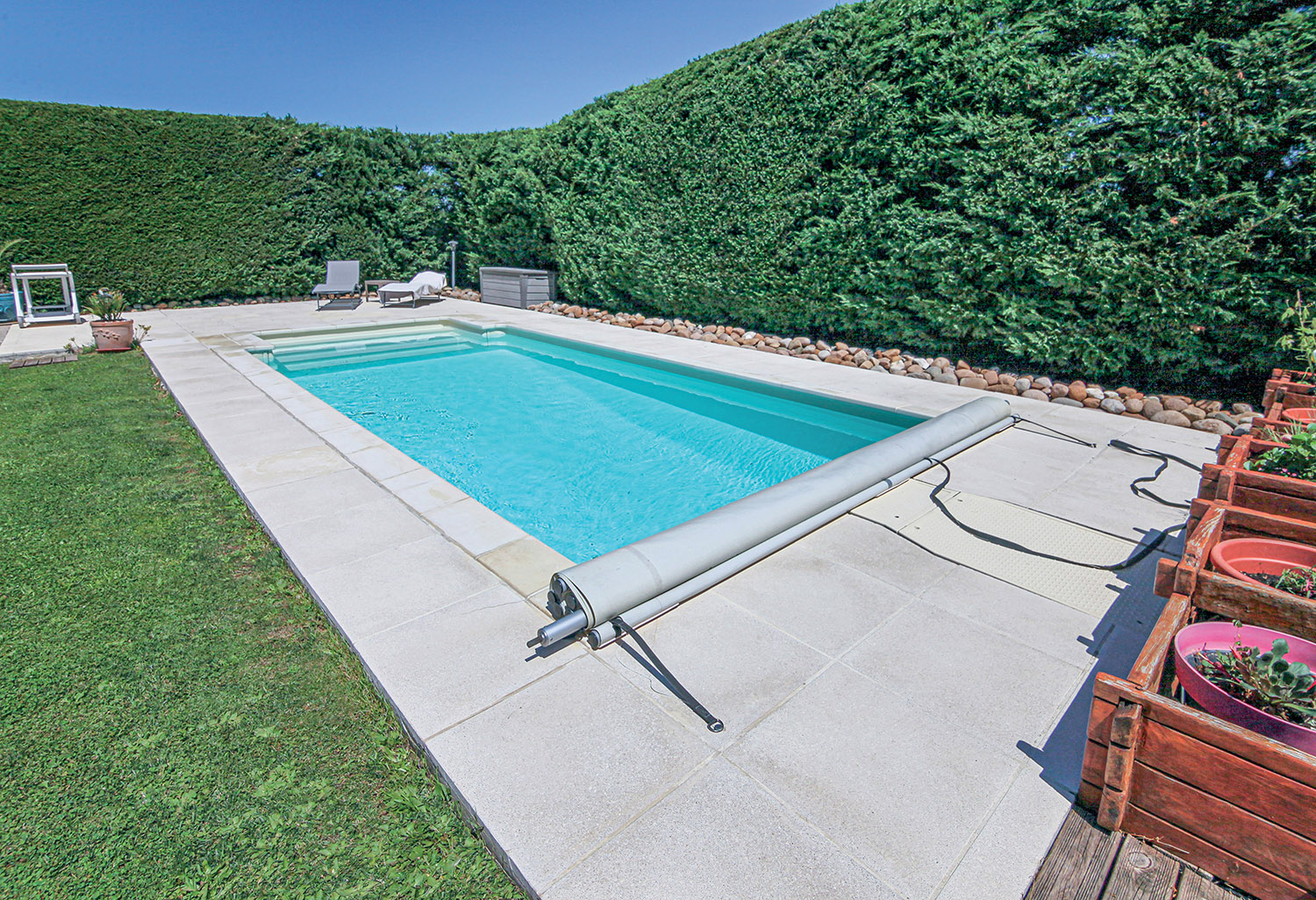
Winter-Proof Your Pool: Less Work Now, No Repair Drama Later
(A practical, non-boring guide to swimming pool maintenance, covers, chemistry, and when to call swimming pool contractors.)
Winter can fool pool owners.
The water looks calm. The usage drops. The surface stays clear for days. It feels like the pool is "resting."
That is the trap.
At Desjoyaux Pools, we see this every year: a pool in winter is not inactive. It is simply slower while it drifts. pH still moves. Chlorine still gets used (slower, but not zero). Leaves still break down in corners. Pumps still struggle if baskets clog. The result usually shows up later, often in early March, when you want the first clean swim and the water turns cloudy.
This guide gives you a simple winter plan that works across India, without making pool care feel complicated.
The Winter Plan That Prevents Spring Problems
- Keep water moving, just less than summer.
- Keep chemistry stable: free chlorine at least 1 ppm and pH 7.0–7.8.
- Use a swimming pool cover to reduce debris and evaporation.
- Upgrade to a pool safety cover if safety is the priority. ASTM's safety cover standard is designed to reduce drowning risk by limiting access for children under five when installed and used correctly.
- Use “active wintering” in most Indian cities, adjusting filtration with temperature. We recommend this approach in many cases, and guidance notes algae growth is very rare when water is below about 8°C.
Indian Winter Is Not One Winter: Pick Your Plan by City
A pool in Chennai has a different winter than a pool in Delhi. Your plan should follow your water temperature and debris, not just the calendar.
Use this quick table to choose your approach.
| Parameter | Winter target you can stick to | Why it matters |
|---|---|---|
| Free chlorine | 1–3 ppm (minimum 1 ppm) | Keeps water sanitised even when you test less often |
| pH | 7.2–7.8 (CDC allows 7.0–7.8) | Supports swimmer comfort and helps equipment last longer |
| Total alkalinity | 80–120 ppm (ideal) | Helps prevent pH from swinging |
| Calcium hardness | 200–400 ppm | Helps avoid scaling or overly “hungry” water |
Our winter approach at Desjoyaux Pools is aligned with partial (active) wintering: keep the pool open, adjust filtration time with temperature, and keep treatment light when conditions allow.
Winter Pool Care Strategy In One Sentence
Keep the water stable, keep the system breathing, keep debris out.
Everything in winter care fits into these three buckets:
- Stability: chemistry stays in range so water does not become corrosive or scale-forming.
- Breathing: filtration runs enough to circulate water and spread chemicals evenly.
- Debris control: a cover and basic cleaning stop organic waste from building up.
Water Chemistry Targets That Keep A Winter Pool Stable
Winter chemistry should feel steady and predictable. Stable numbers are the goal.
The winter target ranges (snippet-friendly)
- CDC guidance for pools recommends pH 7.0–7.8 and free chlorine at least 1 ppm.
- A common “healthy pool” reference range is 1–4 ppm chlorine, with the same pH range.
| Parameter | Winter target you can stick to | Why it matters |
|---|---|---|
| Free chlorine | 1–3 ppm (minimum 1 ppm) | Keeps water sanitised even when you test less often |
| pH | 7.2–7.8 (CDC allows 7.0–7.8) | Supports swimmer comfort and helps equipment last longer |
| Total alkalinity | 80–120 ppm (ideal) | Helps prevent pH from swinging |
| Calcium hardness | 200–400 ppm |
Helps avoid scaling or overly “hungry” water |
How often should you test in winter?
- Mild winter / covered pool: Every 2–3 weeks can be enough if numbers stay stable and nobody is swimming much.
- North India / debris-heavy: Test every 1–2 weeks until you see consistent results.
Public pools test more often because many people use them, but the basic rule is the same: sanitiser and pH must stay in range.
The most common winter mistake
Owners keep adding chlorine but ignore pH drift. CDC notes pH that is too high or too low can make chlorine less effective and can irritate eyes/skin, plus it can damage pool equipment.
Filtration In Winter: What To Reduce, What Not To Touch
Winter is the season of “less,” not the season of “stop.”
At Desjoyaux pools our guidance advises partial wintering as keeping the pool open, adjusting filtration time with outside temperature, and preventing freezing.
A simple filtration rule that works for most homes
- Reduce runtime gradually as the water cools.
- Run filtration during daytime, especially in North Indian winters.
- Increase filtration temporarily after heavy wind, rain, or leaf fall.
Equipment care pays off fast. These steps are simple, but they prevent expensive issues:
- Empty skimmer and pump baskets consistently.
- Watch filter pressure. A sudden change is often an early warning sign.
If you have a Desjoyaux filtration panel/system, follow your operating guide for winter timing and restart steps.
Swimming Pool Cover vs Pool Safety Cover: What To Choose
A cover is not just a sheet. It changes both workload and risk.
- Swimming pool cover (workload reduction)
A swimming pool cover helps you win winter in three ways:
- Keeps leaves and dust ou
- Reduces evaporation, which supports steadier chemistry
- Makes weekly cleaning faster
This is often the easiest winter upgrade for home pools.
- Pool safety cover (safety-first choice)
A pool safety cover is chosen when safety comes first, especially with children and pets.
ASTM F1346 is a performance specification that sets safety cover requirements intended to reduce drowning risk by limiting access for children under five, when installed and used correctly.
What to check before buying a pool safety cover
- Ask: “Is it designed to meet ASTM F1346 requirements?”
- Confirm anchoring suits your deck and coping.
- Confirm rainwater management so water does not collect on top.
Safety covers also include marking and labeling requirements as part of the standard.
The Weekly Winter Checklist
This is a simple plan for consistent swimming pool maintenance.
Every week (10–20 minutes)
- Skim visible debris (even with a cover)
- Brush steps and the waterline
- Empty skimmer basket and pump basket
- Quick equipment scan: noise, leaks, pressure change
Every 2–3 weeks (20–30 minutes)
- Test and adjust: chlorine and pH first, then alkalinity and calcium hardness if needed
- Clean/backwash the filter as your system requires
- Top up water level if it drops
After a windy day or rain
- Skim immediately
- Retest chlorine and pH
- Run filtration longer for that day
The Silent Winter Problems (and the fast fixes)
Winter problems usually build slowly. Small signs matter.
- Problem 1: “Clear water” that turns cloudy after a few days
- Likely causes: Filtration reduced too much, fine debris under corners, pH drifting high
- Fix: Clean the filter, correct pH into range, run filtration longer for 24–48 hours, then reassess. pH out of range can reduce sanitiser effectiveness and cause irritation.
- Problem 2: Late-winter algae surprise
- Likely causes: Sanitiser dipped low, cover gaps, debris sitting too long
- Fix: Brush, restore chlorine into range, keep filtration consistent.
- Problem 3: Scale line on tile or fittings
- Likely causes: pH high, hardness high, alkalinity high
- Fix: Bring pH back into range, then stabilise alkalinity.
- Problem 4: Irritated eyes even with “enough chlorine”
- Likely causes: pH imbalance
- Fix: Correct pH first. CDC connects swimmer comfort and sanitiser performance closely to pH.
When to Call Swimming Pool Contractors (and what to ask)
Call experienced swimming pool contractors if:
What to ask (so you get real answers):
This is where good swimming pool construction shows its value. A well-built pool is not only beautiful. It is also easier to maintain.
Where Desjoyaux Pools Fits Into Winter Care
At Desjoyaux Pools, we treat winter as a season for smart consistency: keep circulation appropriate, keep chemistry steady, and keep debris out. Our partial (active) wintering guidance supports this approach by adjusting filtration time to temperature and keeping treatment light when conditions allow.
Quick FAQ
Q1. Should I close my pool in the Indian winter?
A. Most Indian cities can follow an active winter plan with reduced filtration and stable chemistry. Freeze-risk areas benefit from a winterisation plan from swimming pool contractors.
Q2. What is the ideal pH and chlorine level in winter?
A. A safe target is pH 7.0–7.8 with free chlorine at least 1 ppm.
Q3. How often should I test pool water in winter?
A. Every 2–3 weeks often works for mild winters if the pool is covered and stable. More frequent checks help in colder regions or heavy debris periods.
Q4. Do I need a swimming pool cover in winter?
A. A swimming pool cover reduces debris, evaporation, and chemical drift. It is one of the most effective steps for winter swimming pool maintenance
Q5. What is the difference between a swimming pool cover and a pool safety cover?
A. A swimming pool cover mainly reduces debris and evaporation. A pool safety cover is designed for safety performance. ASTM F1346 defines safety cover requirements intended to reduce drowning risk by limiting access for children under five when installed and used correctly.


