A Pool Cover Completely Changes The Way You Own a Pool
If you think a swimming pool cover is just “a sheet to keep the dust out,” you're seriously under-selling one of the hardest-working pieces of pool equipment you can buy.
Used properly, the right cover becomes:
- A silent lifeguard helper
- A maintenance assistant
- A water and energy saver
- And a quiet defender of your pool’s structure and finish
For a premium, low-maintenance pool brand like Desjoyaux Pools, covers aren’t an accessory. They're part of the system.
Let’s break down why.
What Problems Does a Pool Cover Solve?
It might be a swimming pool for home, a hotel rooftop pool, or a school pool, every uncovered water surface fights the same battles:
- Dust, leaves, insects and pollution constantly landing in the water
- Water silently disappearing through evaporation
- Heat escaping overnight from heated pools
- Chlorine and other sanitisers breaking down faster under harsh sun
A good swimming pool cover tackles all of this at once:
- Shields the surface from debris
- Blocks evaporation (the biggest cause of water and heat loss)
- Reduces chemical breakdown from UV
- Acts as a physical barrier when the pool is not in use
One smart purchase, four major headaches reduced.
How Do Pool Covers Improve Safety – And Where Are Their Limits?
Let’s start with the uncomfortable truth:
Not every cover is a safety device.
- When does a cover help with safety?
A properly installed pool safety cover can:
- Make it significantly harder for small children or pets to access open water
- Support weight when correctly tensioned (for certified systems)
- Discourage unsupervised “quick dips” when the pool should be closed
For families, hotels and schools, that extra physical layer between people and water is a big deal.
- Where do covers not replace real safety?
Safety guidelines around the world are very clear:
- A cover does not replace a four-sided barrier or secure fencing
- Thin solar / “bubble” covers are not safety covers – and can even be dangerous if a child slips under one
- Standing water on top of a solid cover is itself a drowning risk, especially for small children
So the honest takeaway:
Use a pool safety cover as part of a multi-layer safety plan – along with barriers, alarms, rules and supervision – not as your only defence.
Responsible swimming pool contractors, like us at Desjoyaux Pools will always explain this up front.
In What Ways Do Pool Covers Cut Maintenance, Water Use and Energy Bills?
This is where covers quietly pay for themselves.
- How much water can a cover save?
Evaporation is public enemy number one.
Studies show that a good cover can prevent the vast majority of evaporation from a pool surface, dramatically cutting the need to top up water.
Less evaporation also means less heat loss and slower chemical loss, because water isn’t constantly leaving the system and being replaced with fresh, untreated water.
In plain language:
Cover on = water stays put, chemistry stays stable, heater works less.
- How does that help maintenance?
With a cover used consistently:
- Far fewer leaves, dust and insects end up in the pool
- The swimming pool filtration system doesn’t have to work as hard
- You backwash less often and clean the skimmer less frequently
- You spend more time swimming and less time scooping
Because sunlight and evaporation are reduced, chlorine and pH are easier to keep within range – fewer dramatic swings, fewer emergency “shock” treatments.
For large facilities (residential complexes, hotels, schools), that stability translates into:
- Lower chemical bills
- Less staff time firefighting water quality crises
- Longer life for pumps, filters and finishes
What Types of Pool Covers Are There, and Which One Suits Your Pool?
Not all covers are created equal. Here’s the quick decoding:
- Solar / bubble covers
- Light, floating covers with air bubbles
- Great for: reducing evaporation, keeping heat in, cutting debris
- Not great for: safety – these are never “pool safety covers”
- Mesh and solid safety covers
- Anchored to the deck, pulled tight across the pool
- Designed to block access and, in many models, support weight when correctly installed
- Mesh lets rainwater through; solid blocks light and debris completely
- Ideal when safety + off-season protection are priorities
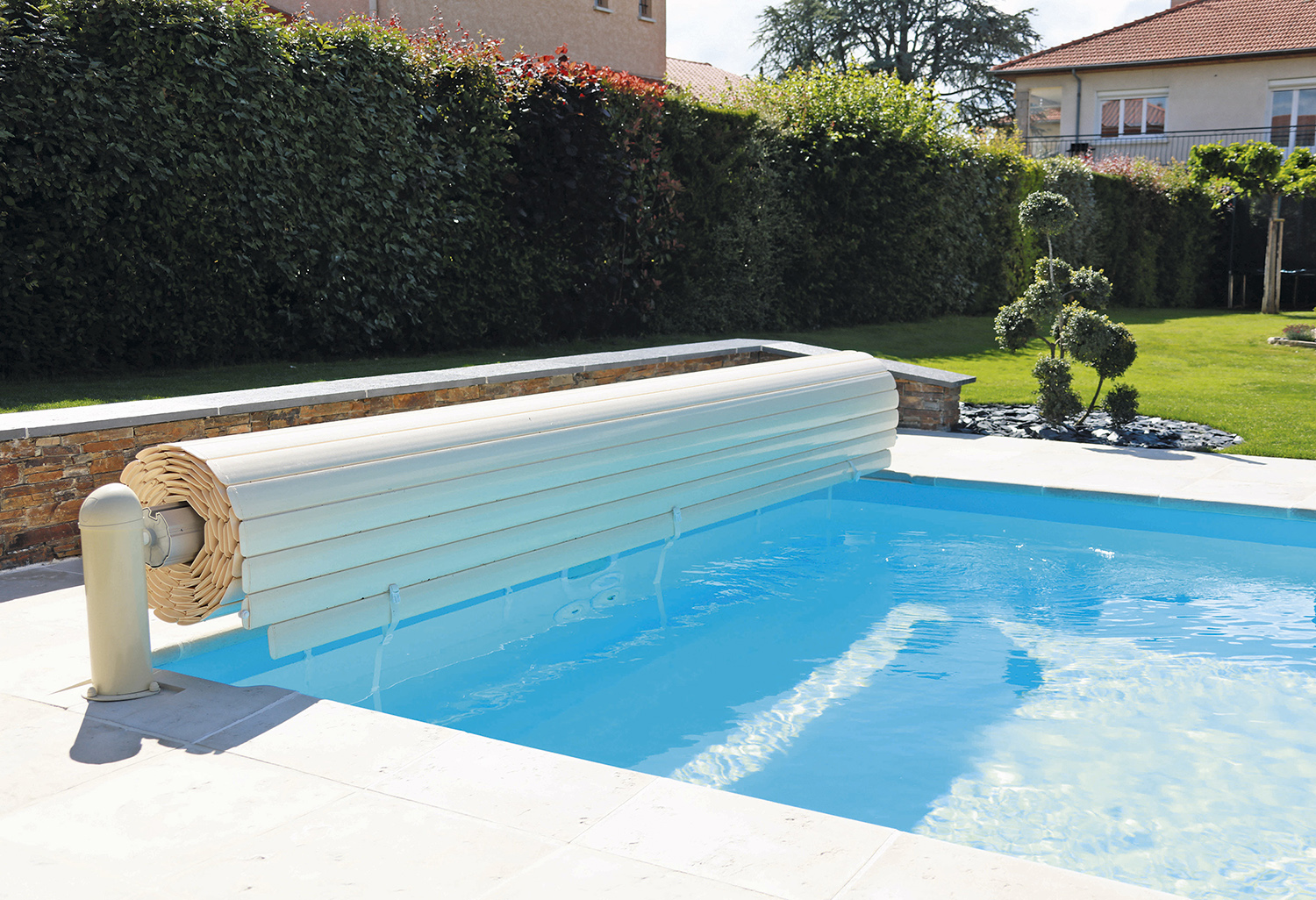
- Automatic covers
- Open and close via motorised system along tracks
- Excellent for daily convenience: if it’s easy, you’ll use it
- Combine heat retention, evaporation control, debris reduction and strong access control
- Winter covers
- Heavier-duty covers designed to protect the pool during months of non-use
- Help keep out large debris and reduce algae growth during long off-seasons
For many clients, the sweet spot is:
- A pool safety cover or automatic cover for family villas, schools and hotels
- A smart solar/lightweight cover for milder, cost-sensitive applications where safety is managed primarily by fencing and supervision
- The right choice depends on how you use the pool, who uses it, and how disciplined you’ll be about actually covering it
How Do Pool Covers Fit Into Desjoyaux Pools’ Low-Maintenance Philosophy?
At Desjoyaux Pool, we build around one core promise:
- A high-quality pool that’s easy to own.
Our technology – especially the patented, pipe-free filtration – already reduces:
- Underground plumbing risks
- Leak points and pressure drops
- Maintenance complexity for owners and facility teams
Add a well-chosen swimming pool cover on top of that and you:
- Keep more debris out of the water ? the filtration unit works more efficiently
- Stabilise water level and chemistry ? fewer interventions, fewer surprises
- Protect finishes and liners from UV and environmental wear
That combination is a dream for schools, hotels and busy homeowners who want a beautiful pool without turning it into a part-time job.
What Common Mistakes Do People Make With Pool Covers?
Three patterns show up again and again:
Like any tool, a cover only works if you use it properly and treat it with basic care.
- Assuming every cover is a safety cover
- A thin floating sheet or bubble cover is not a safety device.
- Only order and market a product as a pool safety cover when it truly meets that standard.
- Not planning for the cover during swimming pool construction
- No proper space for rollers or cover pits
- Awkward shapes that are hard to cover fully
- Steps, rails and features that complicate the fit
Smart and experienced swimming pool contractors like us design cover integration right at the swimming pool construction stage, not after the tiles are laid.
- Inconsistent use and poor storage
- Covers left half-on, half-off
- Standing water and debris allowed to collect on top
- Covers dragged over rough surfaces and damaged, then “blamed” for failing
Like any tool, a cover only works if you use it properly and treat it with basic care.
How Should You Factor a Pool Cover Into Your Budget and Planning?
Instead of asking, “Can we afford a cover?”, try:
“Can we afford to run this pool without one?”
Consider:
- Water cost – Every centimetre of evaporation has to be replaced
- Energy cost – heated pools lose most of their heat at the surface
- Chemical cost – UV and splash-out destroy chlorine; fresh top-up water dilutes everything
- Cleaning cost – staff time or your own weekends with a leaf net
Over a few seasons, a good cover often quietly repays its price in:
- Lower utility bills
- Less chemical use
- Less wear on equipment
- Fewer hours of manual cleaning
Designing for a cover from day one with Desjoyaux Pools – including roller placement, cover pit (if any) and access – makes the whole system cleaner and more elegant.
How Do You Choose The Right Pool Cover With Desjoyaux Pools?
This is where expert guidance matters.
When you involve Desjoyaux Pools early, we’ll look at:
- Who uses the pool – families, guests, students, residents
- How often it’s used and whether it’s heated
- Local climate (dust, leaves, extreme sun, monsoon, wind)
- Your appetite for manual vs automatic solutions
- Safety expectations and regulatory requirements
Then we recommend a swimming pool cover – or pool safety cover – that truly matches your pool’s design and your lifestyle, not just this season’s trend.
FAQs: What do pool owners ask most about pool covers?
Q1. Do I still need a fence if I have a pool safety cover?
A: Yes. A pool safety cover adds protection, but it does not replace proper barriers, alarms and supervision.
Q2. Will a pool cover really make maintenance easier?
A: Used consistently, a swimming pool cover dramatically cuts debris, evaporation and chemical loss, which means less cleaning and more stable water.
Q3. When should I think about the cover – before or after construction?
A: Always plan the cover during swimming pool construction so your swimming pool contractors can integrate roller space, anchor points and edges cleanly.
Q4. Can Desjoyaux Pools help me pick and install the right cover?
A: Absolutely. Desjoyaux Pools can advise on the best type of cover for your design, safety needs and maintenance goals, and coordinate installation with your overall pool system.
The bottom line
A good pool is a joy.
A good pool with a good cover is a joy that’s easier, safer and far more sustainable to live with.