

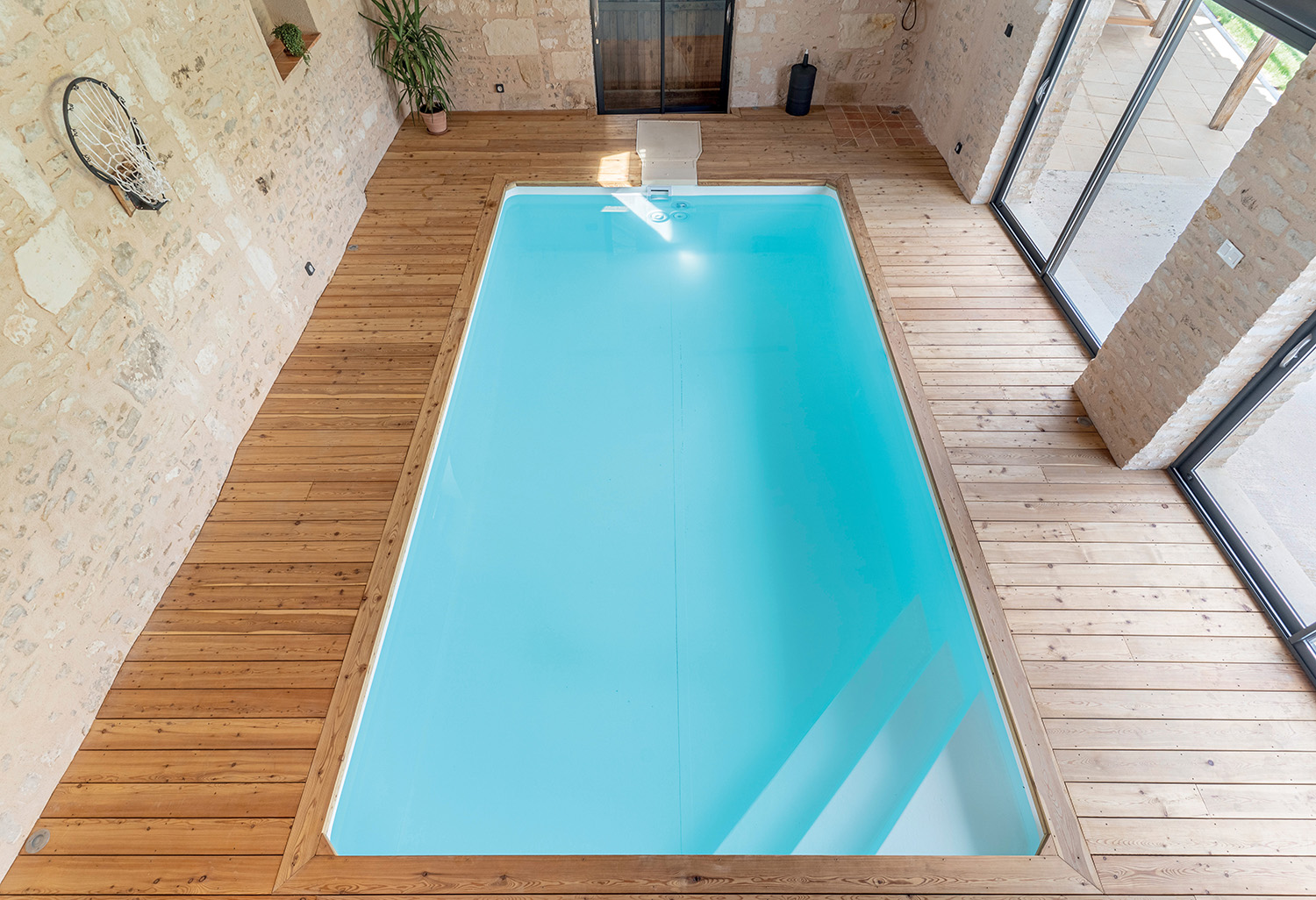
Mumbai’s New Luxury Is Space-Efficient Wellness
Mumbai’s premium homes are evolving in a very specific direction: less wasted space, more liveable luxury. The city’s real-estate mix reflects this, too. Across recent registration patterns, compact configurations continue to dominate, which reinforces one truth Mumbai buyers already live with every day: space efficiency is not a design preference here, it's the baseline.
The takeaway for luxury buyers is simple:
When space is precious, “bigger” stops being the definition of premium. Better planned becomes the definition.
That is where compact indoor swimming pools in Mumbai come in. They let us create a year-round wellness feature inside a controlled environment, often within a dedicated zone of a larger premium home, a penthouse, a duplex, or a boutique hospitality suite.
At Desjoyaux Pools, we also know something most people don’t expect: a home pool can be genuinely compact. With the right structure and filtration approach, we can go as small as 2 × 2 meters for a plunge-style format.
That single fact explains why indoor pools are no longer limited to sprawling plots.
What Is a Compact Indoor Pool?
A compact indoor pool is a small-footprint pool built inside an enclosed space such as:
- A wellness room in a duplex or penthouse
- An enclosed terrace zone
- A basement leisure area
- A spa suite, boutique hotel, or high-end gym
It is designed for lounging, recovery, family use, or low-impact movement, not necessarily long-lap training.
The simplest way to define compact:
A compact indoor pool is not “small for the sake of small.” It is right-sized for the space you have and the way you will use it. That is why swimming pool size and swimming pool dimensions need to be chosen by lifestyle first, not trend first.
Why Compact Indoor Pools Are Trending in Mumbai
- Space optimisation in high-rise living
Mumbai luxury increasingly lives in vertical formats: towers, podiums, duplexes, terraces, penthouses. Compact indoor pools fit into these formats because they work with limited footprints and still deliver a premium experience.
Year-round usage regardless of weather
Mumbai weather is beautiful, but not always pool-friendly: heat, monsoon months, dust, humidity, and strong wind on upper levels. Indoor swimming pools remove the seasonal dependency and make use predictable throughout the year.
- Hygiene and health consciousness
Wellness has shifted from occasional indulgence to routine. Indoor pools work especially well for families and hospitality because a controlled environment supports consistent use, better comfort, and easier supervision.
Aesthetic appeal in modern interiors
Indoor pools today are designed as part of the home’s architecture: calm lighting, stone textures, glass, clean lines. Compact formats often look more refined because the pool feels intentional within the room, not oversized for the available space.
- Rising demand in boutique hotels and spas
In hospitality, compact indoor plunge pools upgrade the guest experience without requiring large outdoor lawns. This category performs because it looks premium, feels private, and works year-round.
Space Optimisation Does Not Mean “Tiny”: What Actually Fits Indoors
Most indoor-pool decisions become clear when you separate two ideas:
- Pool footprint (the water body)
- Indoor pool room planning (clearance, access, safety, services)
Yes, the pool can be compact. We’ve shared that 2 × 2 meters can be feasible with the right approach.
Indoor reality still requires space for:
- Comfortable movement around the pool edge
- Steps/entry planning
- Drainage interfaces
- Service access
- Indoor air and humidity control (non-negotiable)
A compact indoor pool succeeds when the entire room is designed as a wellness space, not just “a pool placed indoors.”
Permissions and Requirements in Mumbai: The Practical Path
Approvals vary based on whether your indoor pool is part of a private residence, a society amenity, or a commercial hospitality use. The fastest projects follow one rule:
Start with feasibility and documentation early, not after design is final.
- Approved plans
BMC’s pest-control documentation for swimming pools includes a self-declaration format that explicitly references that the plan has been approved by the competent planning authority (with approval number and date).
This is important: Approvals are expected to be formal, traceable, and documented.
- Pest Control Office compliance (common in waterbody-related checks)
BMC circulars include a FORMAT OF SELF DECLARATION FOR SWIMMING POOLS addressed to the Pest Control Officer (ward-wise), indicating a defined compliance pathway around vector control.
- Water and civic coordination (Hydraulic Engineer workflows)
BMC’s AutoDCR/BPAMS system provides department workflows and manuals, including an applicant’s manual for Hydraulic Engineer remarks.
In real projects, your architect typically coordinates what applies based on the site, building type, and services involved.
How to navigate approvals efficiently:
A clean Mumbai indoor pool process usually looks like this:
- Architect + structural engineer first (feasibility, drawings, load strategy)
- Society/owner NOC early (if relevant)
- One coordinated submission pack (layout + waterproofing intent + drainage/service routing + access plan)
This approach reduces rework, which is where indoor pool timelines often get stretched.
Note: This section is practical guidance, not legal advice. Your architect will confirm what applies to your specific property and use case.
Structural Support and Indoor Essentials (The Part Most People Miss)
- Structural support
A pool is a major load element. Indoor pools on terraces, podiums, or upper floors must be verified by a qualified structural engineer before swimming pool construction begins. Structure decides feasibility. Design comes next.
- Waterproofing interfaces
Indoor pools demand tighter detailing at junctions and penetrations because any seepage impacts interiors quickly. The build must treat waterproofing as a system, not a layer.
- Ventilation and dehumidification
Humidity control is the most underestimated indoor-pool requirement. Without planned air handling, condensation can affect finishes, glazing, metal elements, and comfort. Indoor pool rooms should feel like a premium wellness space, not a damp service zone.
When humidity and ventilation are engineered correctly, an indoor pool room feels like a spa suite, not a service area.
- Noise and comfort
Indoor acoustics amplify sound. Pump placement, water movement, and room finishes must be planned so the space stays calm.
Swimming Pool Design Choices That Make Compact Pools Feel Premium
Swimming pool dimensions: choose by use-case
- Lounge-first: steps that double as seating, generous width, calmer depth decisions
- Family-first: safer entries, clearer circulation, comfort-led proportions
- Wellness-first: Plunge/recovery formats designed around frequent short sessions
Compact luxury is never about squeezing in water. It is about making the room feel effortless once built.
Filtration and Ownership: The “Live With It” Test
A compact indoor pool must be easy to own. That is where the swimming pool filtration system and service access become decisive.
At Desjoyaux Pools, we build around a practical advantage that matters in compact indoor settings:
Pipe-free filtration. No plant room.
This reduces the space burden that traditional systems often require, especially in premium homes where every square foot is designed, finished, and valued.
Our terrace-pool approach also reflects the same philosophy: rooftop pools require a different story, structure, access, and minimal disruption, so we design accordingly.
Related read: The Benefits of a Pipe-Free Filtration System in Your Swimming Pool
Cost and Installation Time Comparison (What Changes Indoors)
Indoor pools change cost and timeline for one reason:
The pool is only part of the project. The indoor environment is the other half.
What typically influences indoor cost and scheduling:
- Structural preparation and verification
- Waterproofing interfaces and drainage coordination
- Ventilation and dehumidification planning
- Finishing standards (walls, flooring, lighting, glazing)
- Filtration access planning (so maintenance does not disturb the interiors)
Compact pools can reduce civil footprint, but indoor readiness requires disciplined planning.
The win is long-term: Indoor pools deliver predictable use, comfort, privacy, and premium value.
A City That Redefines What “Premium” Means
Compact indoor pools are gaining popularity in Mumbai because the city’s luxury has become more intelligent: wellness that fits beautifully into the life you actually live.
A premium indoor pool project becomes simple when three things are handled early:
- Feasibility and structure
- Approvals and coordination
- Indoor air, waterproofing, and service access
At Desjoyaux Pools, we build compact pools that do not feel compact. We design them as wellness spaces: right-sized, engineered, and made to stay premium long after the first impression.
FAQs
Q1. What is a practical swimming pool size for a compact indoor pool?
A. A compact indoor pool can be surprisingly achievable. With the right structure and filtration approach, a home pool can be as small as 2 × 2 meters in a plunge-style format.
Q2. What permissions are usually involved for indoor pools in Mumbai?
A. Requirements vary by property type and use. BMC documentation includes swimming-pool self-declaration formats tied to planning approvals and pest-control compliance, and BMC’s online system provides department workflows such as Hydraulic Engineer remarks.
Q3. Can an indoor pool be built on a terrace or upper floor?
A. It can be possible, but structural verification is essential. A qualified structural engineer must confirm load capacity before design is finalised.
Q4. What is the biggest hidden requirement of indoor swimming pools?
A. Humidity control. Indoor pools require planned ventilation and dehumidification so the space stays comfortable and finishes remain protected.
Q5. Which swimming pool filtration system is easier for compact indoor pools?
A. Choose a system that keeps water clear, supports easy servicing, and fits your footprint. Our Desjoyaux approach is pipe-free filtration with no plant room, which can simplify compact planning.
Q6. Do indoor pools require different swimming pool contractors in Mumbai?
A. Indoor pools require tighter coordination across structure, waterproofing, ventilation, finishing, and filtration. The right swimming pool contractors are the ones who can manage the project as a system, not as separate trades.
Get a Site-Based Answer in One Step
Share your property type (penthouse, duplex, villa, boutique hotel), one photo of the intended indoor zone, and your goal (wellness, lounging, family use). We’ll recommend practical swimming pool dimensions, the right swimming pool design direction, and a filtration approach that fits your space and ownership expectations.
.jpg)


