

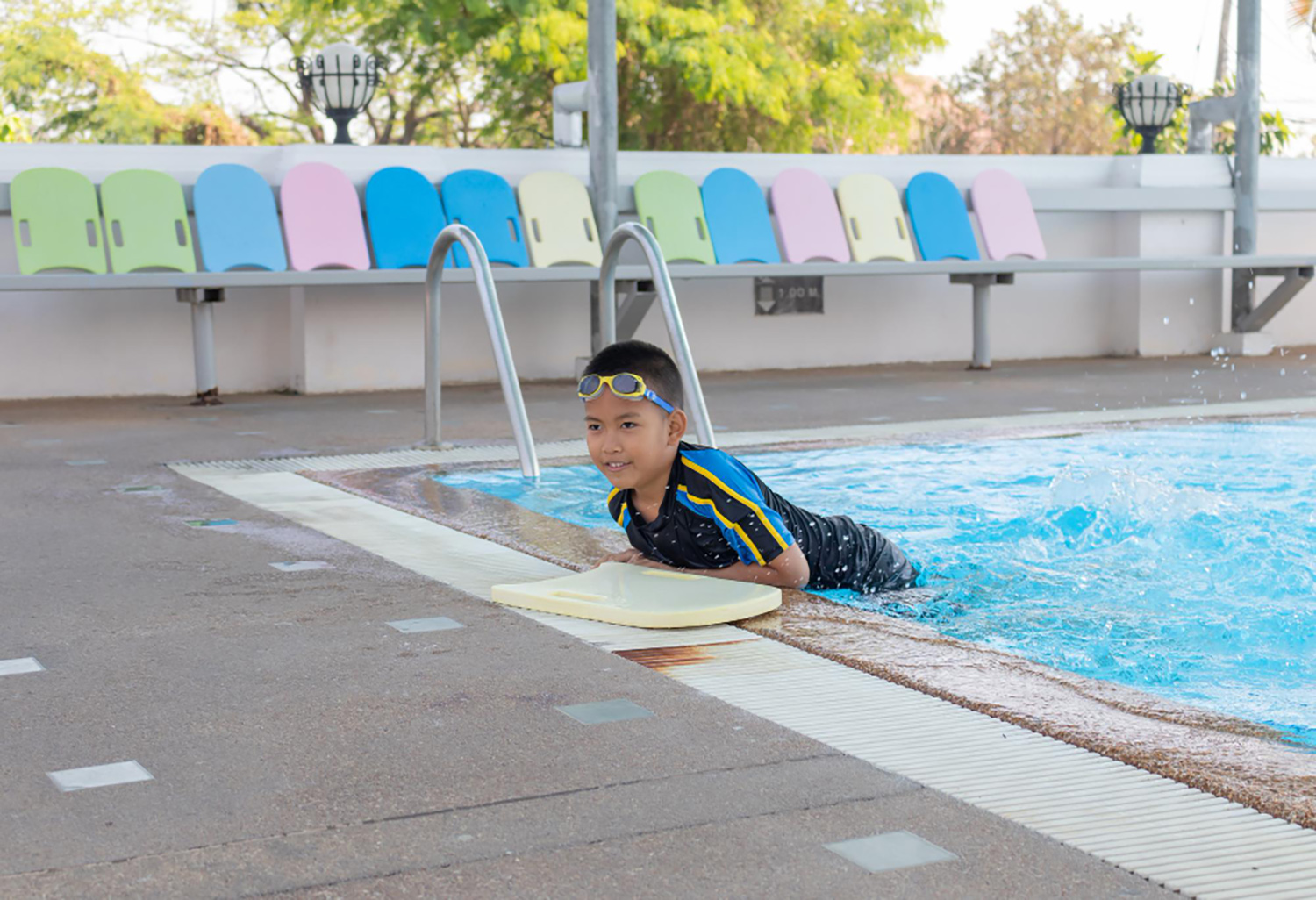
Swimming Pool For Schools: Decisions Backed By Design
Designing a school swimming pool isn't just about choosing a rectangle and filling it with water.
Get it right, and you create a powerful space for safety, fitness and school pride.
Get it wrong, and you inherit a high-risk, high-cost headache for years.
At Desjoyaux Pools, we help schools move past “nice-to-have” and into “designed-for-decades” – with the right swimming pool design, dimensions and systems from day one.
Why The Right Swimming Pool Design Can Transform A School Campus?
A well-designed school pool can:
- Turn “swimming” from an occasional trip into a core part of the PE curriculum.
- Give every child access to life-saving water skills, not just those with club memberships.
- Position the school as a premium, holistic education brand.
The key is to match the swimming pool design to the school’s reality: space, budget, timetable and long-term plans, not to a brochure picture.
What Are The Benefits of Having A Swimming Pool On a School Campus?
Before you look at tiles or swimming pool contractors, it helps to be clear on the “why”:
- Safety & life skills – Confident swimmers, water-safety education and better preparedness for real-world situations.
- Health & fitness – Low-impact exercise suitable for all body types and abilities.
- Competitive edge – In-house teams for inter-school competitions, plus a differentiator for admissions.
- Community value – Potential to host after-school programmes or holiday camps, turning the pool into a shared asset.
When the benefits are clear, it becomes easier to justify the right investment in swimming pool construction and systems.
What Types of School Swimming Pools Can You Choose, And What Dimensions Suit Each?
Different schools need different pool types. Broadly, you’ll look at three options:
Here is how a learn-to-swim pool differs from a training pool or a speciality pool?
- Learn-to-swim / PE pool
- Focus: Confidence, water safety, basic strokes.
- Typical swimming pool dimensions: Shorter length, generous shallow area (0.9–1.2 m), gentle gradient.
- Best for: Primary and middle school programmes where every student must learn to swim.
- Training / 25 m pool
- Focus: Structured lane swimming and basic competition.
- Typical swimming pool size: 25 m long with 4–6 lanes, 1.2–1.8 m depth.
- Best for: Schools with active teams, inter-school meets and fitness-focused PE.
- Deep or speciality sections
- Used for: Diving practice, lifesaving drills or advanced squads.
- Only suitable where supervision, staffing, and deck space are robust.
Most schools don’t need a full Olympic swimming pool (50 m); a smartly designed 25 m school pool will handle training, lessons and intra-school events beautifully.
What Are Ideal Pool Designs For Swim Training and Instructors?
For efficient training and coaching, ideal designs usually offer:
- Clear, straight lanes for timing and technique work.
- Consistent depth that’s comfortable for tumble turns and safe entries.
- Wide teaching steps or ledges where instructors can stand and support beginners.
- Deck width on at least one side for coaches, equipment and waiting students.
This is where precise swimming pool dimensions and thoughtful swimming pool design make instructors’ lives much easier.
Is Your School Ready For A Swimming Pool?
Before committing to a build, leadership teams should ask:
- Programme readiness – Do we have a clear plan for how often classes will use the pool each week?
- Space readiness – Is there enough room for the pool, decks, plant and access routes?
- Budget readiness – Can we cover not just construction, but staffing, utilities and maintenance for years?
- People readiness – Will we have qualified lifeguards, trained teachers and maintenance staff?
If the answer to these questions is unclear, it’s better to refine the brief now than face problems after swimming pool construction is complete.
What Swimming Pool Design and Dimensions Are Suitable for Schools?
There’s no single “ideal” school swimming pool, but a few principles hold true:
- Think learning first, ego second – It’s better to have a slightly smaller pool that’s always used than an oversized prestige project that’s hard to staff and run.
- Match depth to users – Younger children need long shallow sections; advanced swimmers can handle deeper lanes.
- Leave space around the tank – Deck width is crucial for supervision, class organisation and safety.
A good starting point:
- For mostly learn-to-swim: A modest rectangle with a large shallow end and clear, gradual slope.
- For mixed needs: A 25 m pool, 4–6 lanes, with thought given to a dedicated teaching zone at one end.
Should Your School Choose An Indoor or Outdoor Pool?
Both options can work brilliantly, they just come with different trade-offs:
- Outdoor school swimming pool
- Lower initial build cost.
- Seasonal use in many climates.
- Needs strong planning for weather, debris and off-season care.
- Indoor school swimming pool
- Higher capex but extended or year-round use.
- More complex building envelope (ventilation, humidity control).
- Easier to integrate into timetables regardless of weather.
Desjoyaux Pools can work with your architects to align swimming pool design with local climate, usage patterns and available footprint.
How Will Maintenance, Filtration and Daily Operations Affect Your School Pool in India?
A school pool that’s hard to run will quietly drain budgets and staff energy.
Key questions:
- Is the swimming pool filtration system correctly sized for class-level bather loads?
- Can facility teams easily access equipment for checks and servicing?
- Are we minimising underground pipes, valves and hidden failure points?
This is where we at Desjoyaux Pools stand out:
- Our patented pipeless filtration system dramatically reduces long underground pipelines.
- Plant is compact, accessible and easier to understand for non-specialist school staff.
- Standardised systems simplify training and handover compared to one-off custom plant rooms.
Operational simplicity is just as important as beautiful swimming pool design.
What Safety Standards and Supervision Should Every School Swimming Pool Follow?
No discussion of a school swimming pool is complete without safety at the centre:
- Controlled access – Secure fencing, lockable gates and clear policies so children can’t reach the water unsupervised.
- Clear visibility – Lifeguards and teachers must be able to see the entire pool floor; avoid blind spots and awkward shapes.
- Safe entries and exits – Wide steps with handrails, properly designed ladders, and, where possible, accessible ramps.
- Entrapment and suction safety – No single high-suction drains; use multiple inlets, safe grilles and modern outlet designs.
- Electrical protection – Pool-grade lighting, correct earthing/bonding and RCD/GFCI protection on relevant circuits.
Smart swimming pool contractors design these safety standards from the beginning – they’re not “extras”.
How Can Desjoyaux Pools Make School Pool Design Simpler and Safer?
Working with Desjoyaux Pools means working with a system, not a one-off experiment:
- Engineered structure – Our permanent-casing construction creates a strong, monolithic shell, ideal for institutional use.
- Simplified hydraulics – The pipeless filtration system cuts down underground complexity and leak risk.
- School-friendly support – We work closely with architects, planners and school management to align design, timetable and operations.
For principals and boards, that translates to one thing: less risk, more value.
What Key Questions Should You Ask Before Approving A School Pool Project?
Before you sign off on a design or appoint swimming pool contractors, ask:
- What is the primary purpose of our school swimming pool – learn-to-swim, training, or both?
- Do the proposed swimming pool dimensions truly match our age groups and timetable?
- How does the swimming pool filtration system work, and who will maintain it daily?
- What is our realistic annual operating budget, not just the build cost?
- Why is this partner – ideally Desjoyaux Pools – the safest choice for our students and brand?
FAQ: Pool design for Schools?
Q1. Which comes first – swimming pool design or swimming pool construction planning?
A: Always start with swimming pool design: purpose, dimensions, depth and location. Only then should you move into detailed swimming pool construction drawings and schedules.
Q2. How important is the choice of swimming pool contractors for a school project?
A: Critical. Experienced swimming pool contractors understand safety, hydraulics and school operations in a way general civil contractors often don’t.
Q3. Can Desjoyaux Pools work with our existing architect and project team?
A: Yes. Desjoyaux Pools often collaborates with school architects and engineers to integrate our system, structure and filtration into the wider campus design.
Q4. What if our school wants to start small and expand later?
A: A modular approach to swimming pool design can allow phased development – for example, starting with a learn-to-swim tank and planning for future training lanes as demand grows.
Continue Reading: What are Ideal Pool Designs for Swim Training and Instructors
Reach Out To Us At Desjoyaux Pools
When your school is ready to explore a pool that’s safe, teachable and sustainable, our Desjoyaux Pools team is ready to join the conversation – from first sketch to first swim.